Showing posts with label Rule of Three. Show all posts

Thursday, January 16, 2014

A Week of Voluntary Simplicity - isn't it over yet? Part D

A fragment of the Natchez Trace Trail, a wagon road for settlers into the interior of the US.
Is this killing you? If you are still reading this week, then maybe you are secretly trying to figure out for yourself how to go about living a life with some changes. You don't have to find God to make it work, or twist yourself into a pretzel yoga pose to find it either. Here are my suggestions.
The Ryman Auditorium, the home of the Grand Ole Oprey until the '70s
Lie there in bed one morning, before you get up to hit the bathroom and ask yourself, what is the first thing I do in the morning? Is it pee? Is it brush my teeth? Can I do anything different in those first few activities?

Let's pretend that you live in an apartment and there isn't a choice about what sort of toilet you  have, so buying a dual flush one won't happen. You have sensitive teeth or dentures. Changing toothpaste isn't really an option especially since all other options are just as non-green or too expensive or taste like hell.

Get up anyway, don't let a lack of ideas hold you back. Get breakfast. Look at what is on the table in front of you. Is there a single food option that you could alter? Can anything on that table be bought locally or through a CSA box or in a fair trade exchange? No? Well, don't worry, move on.

Ask the same questions as you put on your clean underpants, jeans and shoes. Get your coat on and hop onto your form of transportation. Any changes showing up as possible yet? No. Don't worry, keep going.

You're at work, or visiting or volunteering. Do you see anything that can be recycled, could you turn lights off, could newspapers be shared, did you notice anyone you could offer a ride to? I bet you're getting kind of pooped by now. It's almost over.

Lunch - look at it the same way as breakfast.

Your afternoon activities - you get the picture.

You are back at home and all this questioning has given you a headache. Get that glass of wine or beer, you deserve it. You have just accomplished the first major step in Voluntary Simplicity. You have examined your actions towards a deeper understanding of your patterns, your preferences, your community, and also, your tolerance for the whole project.

 I suspect that along the day, several glimmers of ideas came your way and they will pop back up. You don't need to chase them down. They will show up again
Bridge on the Natchez Trace Parkway, Nashville.
If you ask yourself these questions several times over a week. Start with something simple and direct. How about toilet paper? Can you buy toilet paper that uses recycled paper or is local or is unscented? Or maybe it isn't a substantially 'greener' choice, but it's cheaper. You just lived below your means for one purchase, saved.... let's pretend 0.15 cents and you can use it towards buying a food gift card for someone who is short of money.

Congratulations, you have made a change and I bet you feel positive about it. Do it again. Keep going but stop before you feel exhausted. Pretty good is good enough for now.
I ran out of poetic metaphors and images. See what you can make of this.
p.s. I'm off to meet with my stitching group tomorrow. The End of Looking at Voluntary Simplicity for now.

Wednesday, January 15, 2014

A Week of Voluntary Simplicity - My attempts - Part C

It doesn't do any good to bring out a book and wave it at people, saying to them "Do Something" without examining my own life.

Voluntary Simplicity for me is a way of thinking as much as a way of living. It means thinking out significant decisions in as deep a way as I can. Recognizing the difference between a need and a want, and also realizing that on occasion, there is room for the things we want. It also has to do with letting go of anger, envy, greed and mindless privilege.

Here are some truths for me:

It is easier to achieve when there aren't children in the house,
it is easier to achieve if there is a single income that has been carefully considered over the years,
it is easier to achieve if there are other people around me who aren't determined about getting somewhere else (raises, jobs, new this or that),
it is easier to do if I don't shop often, don't read magazines, or listen to the news.

Here's a metaphor for you. If every item in the woodshed were a decision, and they don't all fit nicely together, and there are a few that don't fit well, and a few that don't fit in at all but nearly do, but they are made with the intention of simple living, then eventually the woodshed holds it all together.

It is harder to do if I am tired, sick, lonely or angry,
it is harder to do if I have tied myself into a knot by denying myself something that isn't really that significant.
     (For instance, the world won't end if I buy a book instead of borrowing it from the library, in fact, it can    be good for the publishing industry)
It is harder to do when I feel I am acting with poor information; if I don't trust the media or the politician or the corporation.
It is harder to do when being simple feels like a political action that rubs my friend's noses.

That doesn't mean I don't attempt it, it's just harder. Sometimes too hard, and I give myself permission to fail and try again later.

What do I do that's simple? The easy stuff, because it's easy. We recycle, reduce, reuse and repair. I know how to do many handcrafts, knitting, sewing, spinning, cooking, preserving, making music, reading, writing and drawing. I can reduce some kinds of shopping, make things, and entertain myself quite easily. I like being with people sometimes, this increases my engagement with community. I volunteer, another way to create community. I work from the home, we reduced the number of extra curricular activities we all did to reduce running around, we take time to assess decisions, we take time to celebrate. Especially my birthday, which requires cake and cards.

Here's another metaphor. Simplicity looks different for each person.

What is really tricky is finding reliable information to make decisions with. Banking - our mortgage is with a bank I regret instead of a credit union. Pretty much the same with investments. Politics - I think everyone is lying about something - I have no faith that the political arena is a good arena. But I do believe I have a duty to keep expressing and demanding my civic rights, my environmental rights and political rights. Maybe one day these systems will heal.


I am terrible at going to rallies or writing politicians. I am good at community building and communicating. It is possible for us each to act in our own political way. And to let go of judging.

Tuesday, January 14, 2014

A Week of Voluntary simplicity - Expresssions, Part B

Duane Elgin in Voluntary Simplicity drew up a list on typical practices of those who self identify as living a simpler life:

-Invest time and energy by simpler living in activities with partner, children, friends (walking, music, meals, camping) or volunteering or civic affairs
Students playing at the Annual No Talent show. They had never played together before, but they sounded great. Steve had his banjo playing debut that night. He's been a nut about it since, and he's happy. I have better headphones now.

-work on personal potentials - exercise; emotional development (relationships); mental skills (reading, classes, new skills); spiritual (quiet mind and compassionate heart (a summary from many faith paths))

- reconnect with Earth, ecology, environment,
Walking at Point Pleasant Park in the spring. City parks can be lovely.

-concern for world's poor, social justice, use of world's resources,

-lower levels of personal consumption - buy less, reduce personal ornamentation, fewer cosmetics, holidays made less commercialized,

-consumer goods that are more durable, easy to repair, non-polluting in manufacturing, energy efficient, functional, aesthetic,

-shift diets away from processed foods, meat and sugar, (huge debates on the food topic - too complex to comment on here)
Baked apples. Every three months we gathered at a different house with a different theme for the meal. Now we meet for different pizzas and beers. Not as earnest, but we support local pizzerias and local breweries.

-reduce clutter and complexity in personal lives, (yeah, but don't buy magazines to tell you how and then buy pretty boxes that fade to fix it up)

-use consumption politically,

-recycle, cut back on items that are wasteful of non-renewable resources

-pursue livelihoods that directly contribute to the well-being of the world and uses creative capacities*
       I have a problem with this one. I think a better phrasing might be find a lively hood that causes no harm. Lots of scientific discovery has been co-opted by the military or corporations. Many jobs are interesting but require a greater sensitivity to global concerns. Would it be wrong to be a stock broker if markets were more responsible? Bankers and banking policies? I'm all for using creative capacities provided it isn't about being a robber baron.
Snow the Cat wants to be a Train Conductor but only if he's allowed to nap on the job.

-prefer smaller-scale, more human sized living and work environments,**
        I don't buy this entirely. It's too complex an issue. If you sell your mega home to live more simply, aren't you just off loading your consumption onto someone else and going to the bank with the profit? Also, living and/or working in a dense urban center means less energy consumption over all.  In some ways, what is wrong with an office tower? This needs rethinking given current potentials in heating and cooling and public transportation. New York City is probably one of the most environmentally sustainable cities, simply because people and systems are so close together and can reduce gas consumption by a huge degree, if only......

-I like this portion of the list but think the rest is full of self congratulations. Read page 110 and see what you think.

Overall, there needs to be a precaution against two things. Don't congratulate yourself too easily and don't rationalize hard choices too quickly. This needs deep work to figure out choices that are sensible, possible to endure and not a response to guilt. Therefore, resilient.


Monday, January 13, 2014

Voluntary Simplicity - let's look at it. Part A


"The purpose of life is to create a life of purpose"
Richard Gregg paraphrasing a teaching of Mahatma Gandhi (1936)

I have been reading Voluntary Simplicity by Duane Elgin (1981), and related excerpts from other writers.
here
Product Details
I realized that I had read Elgin's book some time ago, back when this wheeze for Steve and I (and hopefully the kids) to embrace a more sustainable lifestyle solidified into a concrete set of tactics. We already recycled, reused, reduced (helps when there isn't a lot of money), agonized over purchases, bought things that were better quality so they would last longer and just generally tried to be earth sensitive. I didn't really have a good idea what being earth sensitive meant, but we worked on it. Get rid of most things powered by a battery and you're a long way there.

About 5-ish years ago we decided to get local with our food and as many other purchases as we could. It has been an interesting ride. Voluntary Simplicity seemed easy in relation to these two choices. (click here to read other posts, voluntary simplicity, )

But what is  Voluntary Simplicity? Voluntary of course means that there is a choice about lifestyle. It means there is a conscious attempt to make a change. Simplicity is a testimony for Quakers and other groups. There are a gazillion responses to this query. I think what it boils down to is to live below your means, to be involved with local community, to be aware, to give, to avoid waste in as many ways as possible, to be resilient.

Common misconceptions include; simplicity means poverty, rural living, ugly living, and/or economic stagnation. "These stereotypes make simpler life seem impractical and unapproachable and thereby reinforce the feeling that nothing can be done to respond to our critical world situation." Elgin.

Elgin participated in the "Voluntary Simplicity Survey" I don't know about it's statistical validity. It seems sound, but then who knows with statistics. What is interesting is that voluntary simplicity is rarely a path chosen by those who began life in poverty, who are from a non-white background,or  have slightly lower than middle incomes. It also shows that this path is across geographies, largely urban, involves people with higher education (it doesn't state where higher begins), and most people had been engaged for 6 or more years. It doesn't seem to be a fad, also given the book is 32 years old. I wonder what the survey results would look like now?

Lately, it also means to discern if you are being tricked into thinking you are buying a simple/sustainable option. Carbon offsetting is a game. Dual engines are a scam. Simple living style magazines are a definite pander. Don't get me started on organic cotton or bamboo fibres. Look at it! What processes are going into things. (ooops, bit of rant that last bit)
 
Resilience is a term being included in critical thinking about sustainable practices. In other words, if a thing can't happen because you have simplified to the point of excluding something, is this a right practice? If your parent needs weekly visits to the doctors, you gave up all the cars, but taxis frighten your parent, then is this a good choice? Maybe you still need a car once a week? If you decide to bike everywhere, but it snows in your area a lot, then what is plan B? If you only buy organic clothes, is sweat labour involved? In other words, go below the surface. It might turn out that one choice means injustice for another. Discern. Then, whatever choice you make in your food, transportation, clothes, entertainment etc. is informed, cautious, and repeatable.

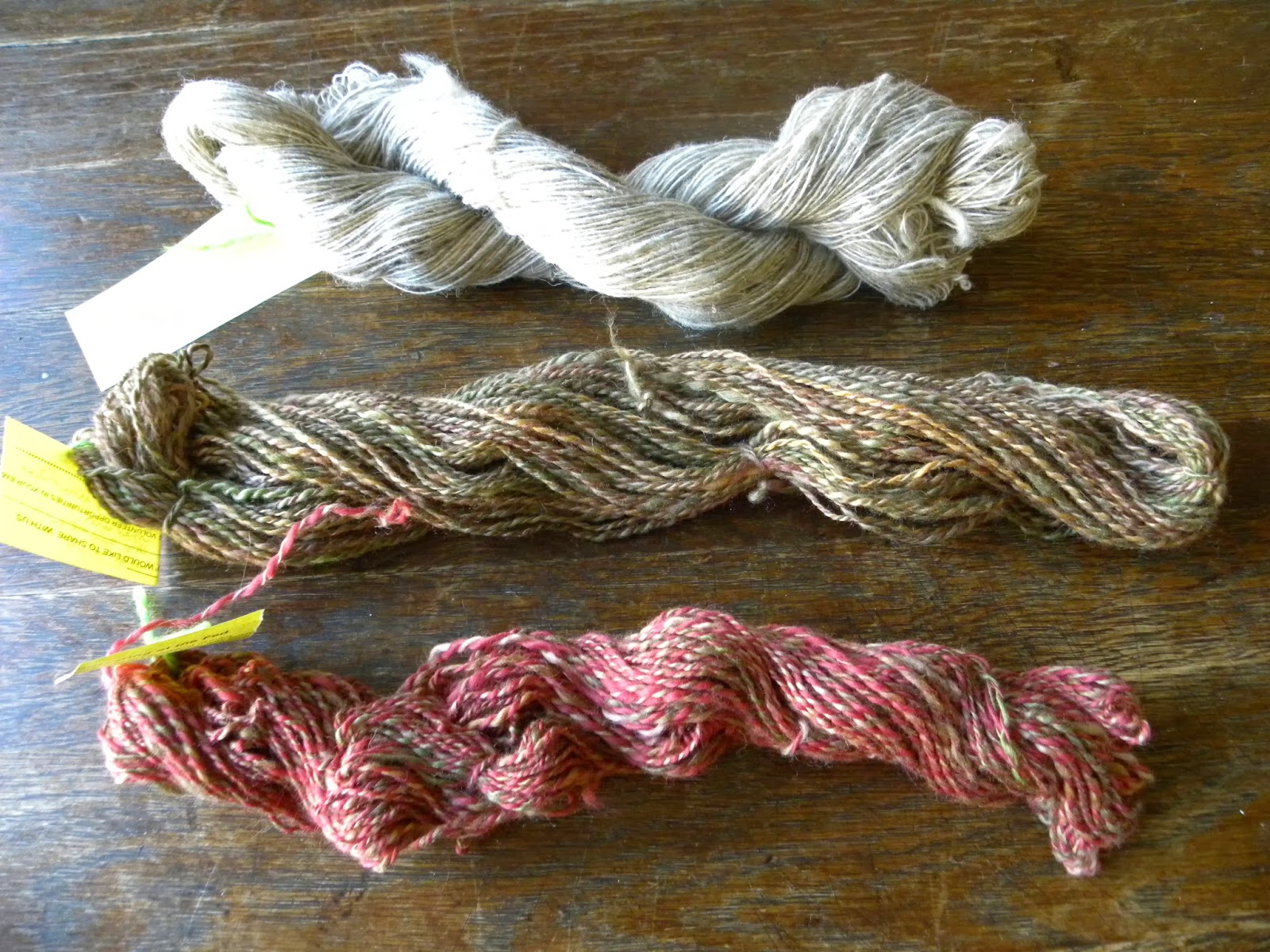
In preparing this blog, I found it interesting that my most careful photographs came from my textile work or from trips to the country side. I have read a completely different book about Nature in urban settings. I smell a challenge to find pattern and serenity inside city limits.

I'll look at "Common Expressions of Simpler Ways of Living" by Elgin next post.

Tuesday, October 2, 2012

The Rule of Three

The Rule of Three is a simple device to help anyone consider if any travel they are going to do is as sustainable as it could be. I'm not speaking about the means of transportation, that's a snarly question and depends entirely on where you are going and what means of transportation is available.

Wright Brother's first airplane (google images)
The Rule of Three helps you decide if you should travel in the first place.

Brace yourselves.

Will the trip honestly, truly and without stretching for rationalizations answer a deep Personal need, and/or a deep Professional need and has a Truly Significant Purpose?

If you can answer yes to two of the above queries, and there is a Truly Significant Purpose, then it's alright to go. If you have to wiggle around to sort of convince yourself there is a reason besides the Truly Significant Purpose, then really, you shouldn't go. Or you can go to Step Two, but read about Step One first.


google images
Step One is a process of discernment that lets you consider the potential travel in an honest way in the context of your life. The road to rationalizations is an easy one, one we use every day. An honest scrutiny is a tough one and might lead you to saying 'No' to something you would ordinarily say yes to.

Significant Purpose? Are you sure? Habit is a nasty way of convincing yourself that something is important when in fact saying NO is the right thing to do? How is this trip going to significantly add to your personal or professional objectives. Will you be reaping something that couldn't be achieved another way?

Personal? Is there going to be something in the trip you are planning that will meet a deep personal objective that you've had on your mind for a long time, or will it allow you to have some time free from daily demands, a respite? Can you add two days onto your time and sail the Baltic Sea, or can you get to that Science Museum you've always wanted to go to but never gave yourself the extra 10 hours it would take? Or could you add two days, stay in the quiet hotel and get that paper written while enjoying some Parisian coffee and pastries? A working respite. Is there a family component? Or friends? Maybe your family really doesn't want to go see Granny but you do. Instead of loading the whole gang on an airplane to drop in for a day or two before heading to where you all really want to go, adding days and flying miles onto the trip, why not visit Granny alone while on a business trip? 

This seems kind of professional, doesn't it? (google image)

 Professional? Man oh Man, this one is so easy to rationalize it isn't funny. Someone (maybe yourself) tells you that you need to travel to this place or that place to meet this group, or settle this issue, or give a paper, or listen to a paper or buy something. We don't question it, it's part of the job or maybe part of a budget and you don't want to lose that funding for next year. Or is it. Is it habit? Can it be accomplished in another way, by a conference call or Skype, or can someone already there in the company do the task? Can you bunch up travel so that in one larger trip you can consolidate flying miles? Sometimes No is the correct answer, especially if it gets in the way of important Personal or Private Needs that are happening at home.

(google images)

I confess we went to Spain last year for two weeks and the Rule of Three was tough for me to use. I don't have a professional life beyond looking for visual images that inspire my art work or writing. Had to say no to that category. Personal? No family in Spain and no friends to drop in on. However, I hadn't traveled on a real vacation for  nearly 20 years. I've had a few trips back to Toronto to see family and so forth, but nothing that involved beer and views and great food and sleeping in. So my answer to Personal was beginning to sound like a Yes. Then I thought about Steve and my family and how I was ready to put them all through the meat grinder. Empty nest, man across the table I recognized but was regularly surprised to see....

Casablanca movie, at the airport, saying goodbye. Steve and I were saying "Hello!" (google images)
Truly Significant Purpose = To be in a better relationship with my marriage. I really, really needed a time away from the house and kids and cats. I don't exactly recall how Spain became the answer but it did and it was great and it is unlikely that this will happen again.As I read this over and over, I keep coming up guilty. Couldn't we have had a marriage recharge somewhere local? Well, yes. But I'm 52, haven't traveled for years and I wanted some memories and fun and adventure and damn it, I'm worth it once every 20 years.

(google images)
 For Steve, the scrutiny was different. He works a tension filled job and time away in a place that was intellectually stimulating and 'other' was becoming essential. Yes to Personal. Spain is filled with fabulous architecture and cultural history. Steve the architect and Spain = good fit. The Alhambra is one of those places any decent architect and cultural historian should see up close. Yes to personal Professional development. Truly Significant Purpose = sanity and marriage renovation.

Step Two:
Steve recently  had to go to Germany for work. Personal? Not truly but it turned out he was able to see some things related to his lectures. But that happened without prior planning and so in the course of the Rule of Three, doesn't count. Professional? Not at first. Truly Significant Purpose? Initially the answer from up high wasn't satisfactory. He was expected to go and schmooze, whatever. What was his problem? Steve pushed back and eventually the people planning the trip connected him to some people and places that will have positive gains for several years. Truly Significant Purpose = long term exchange programs for students and faculty, plus funding (maybe).


Sometimes the Rule of Three just won't work. If you have to travel home for a funeral or wedding, or if a job related journey just won't allow for anything else to fit in, OK. But if you keep trying to apply the Rule of Three, eventually, most of your travel will...

(google images)
...begin to look more sustainable, more thoughtful and perhaps even lessen a bit? Or maybe the proposed journey just doesn't need to happen if the single need is shallow. What would happen if you said NO? Or maybe the methods of interacting with colleagues far away will improve due to increased demands of quality and ease of reliability. Says the woman who only recently figured out Skype but my kids are in town so no one wants to play.